Using Messaging in Healthcare: How Two-Way SMS, RCS and WhatsApp Are Transforming Patient Communication Across Care Settings

Est Read Time: ~10 Mins
Imagine Sarah, a diabetic patient managing her care remotely. She receives a timely SMS reminder for her next appointment, prompting her to confirm attendance. Within seconds, she replies "YES" and feels reassured that her care is on track.
This simple interaction reflects a wider shift in healthcare communication. Traditional methods such as letters and phone calls are being supplemented - and in many cases replaced - by secure, two-way messaging across SMS, RCS and WhatsApp. When designed correctly, messaging improves patient experience, operational efficiency and, critically, patient safety.
At LINK Mobility, we work with healthcare organisations to design and orchestrate these conversations across the entire patient journey. In this guide, we explore how messaging is being used across care settings, why it matters, and how healthcare providers can deploy it safely, securely and at scale.
Why Messaging Is Becoming Essential in Modern Healthcare
Healthcare teams are under pressure to deliver fast, personalised care while handling more demand and fewer staff. Communication gaps still cause missed appointments, slow responses and extra admin work.
Messaging helps address these challenges by enabling healthcare teams to:
Reach patients quickly and securely.
Improve attendance and treatment adherence.
Provide tailored, timely information.
Reduce pressure on administrative and clinical staff.
The NHS is actively moving towards a digital-first communications strategy, using SMS, email and the NHS App to reduce reliance on paper letters. By 2026, the NHS plans to send 270 million messages annually through the NHS App alone, improving reach while cutting costs.¹
The real value of messaging is in creating structured, two-way conversations that fit clinical workflows and meet governance standards, not just sending notifications. For instance, a structured messaging template might include a step-by-step interaction like this: 1. Initial notification sent: 'Dear John, your consultation is scheduled for 10 am tomorrow. Reply YES to confirm, or NO to reschedule.' 2. Patient responds: 'YES' 3. Automated confirmation sent: 'Thank you! See you tomorrow at 10 am.' Such structured interactions ensure clarity, compliance, and actionable communication within healthcare settings.
Understanding Two-Way Messaging in Healthcare
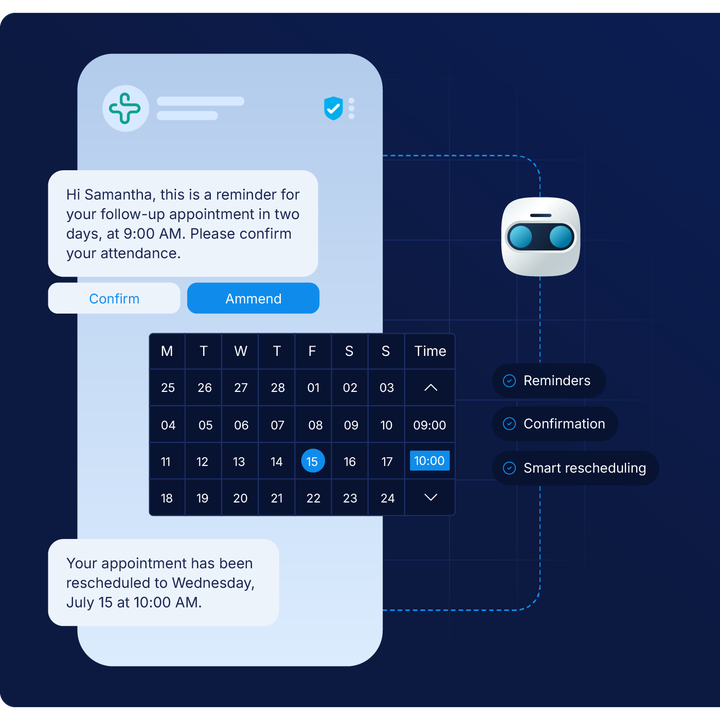
Two-way messaging lets patients and care teams interact securely. They can confirm appointments, ask questions or raise concerns without waiting on the phone or sorting through crowded inboxes.
What Two-Way Messaging Means in a Clinical Context
In healthcare, two-way messaging is structured, not an open chat. Patients follow clear response options like:
"Reply YES to confirm your appointment"
"Reply 1 to reschedule, 2 to cancel"
"Reply URGENT if symptoms have worsened"
These replies go straight into clinical or operational workflows, so every interaction is:
Logged and auditable
Secure and governed
Actionable in real time
This approach helps healthcare teams:
Reduce no-shows through interactive reminders.
Manage appointments dynamically and securely.
Enable rapid triage or escalation without compromising data protection.
Many NHS trusts already use two-way SMS to confirm, cancel or reschedule outpatient appointments, freeing up clinical capacity and reducing waiting times.
At Alder Hey Children's NHS Foundation Trust, LINK Mobility supports a different use case altogether: patient safety escalation. Using LINK's two-way WhatsApp messaging, patients, families and staff can trigger a rapid clinical review as part of Martha's Rule. Messages are structured, auditable and routed to the right teams - delivering real-world impact through a channel families already trust.
Technology used: MyLINK Connect
When One-Way Messaging Still Has a Role
Not every interaction requires a response. One-way messaging remains effective for:
Appointment reminders
Medication prompts
Service updates and alerts
These messages are often more reliable and cost-effective than letters or voicemail, particularly when delivered via SMS.
Key Messaging Channels in Healthcare
SMS for Healthcare Communication
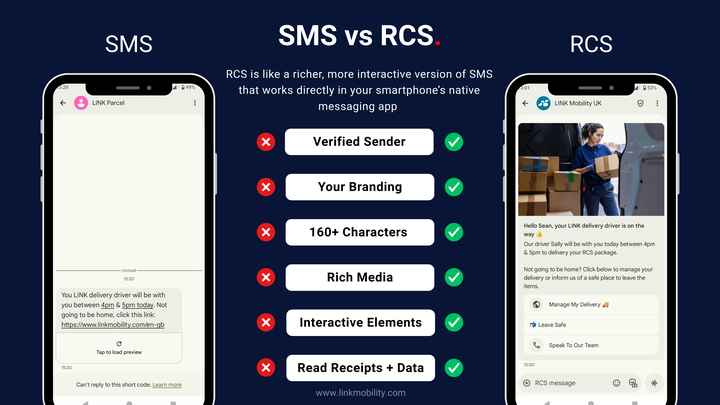
SMS is the most universal healthcare messaging channel. It works on any mobile phone, needs no app and is highly reliable. That makes it ideal for critical updates.
The NHS widely uses text-based communication from applications to individuals (application-to-person, or A2P) SMS for appointment reminders and confirmations as part of its digital-first strategy. NHS England highlights SMS as a key tool for reducing missed appointments and administrative costs.2 Ofcom also recognises A2P SMS as a critical channel for essential public services due to its reach and reliability.3
RCS Messaging for Rich Patient Engagement
RCS (Rich Communication Services) enhances traditional SMS with interactive features such as:
Branded sender profiles
Images and videos
Buttons and quick replies
Carousels and links
RCS is ideal for sending pre-visit details, appointment changes and follow-up guidance. Patients can take action right from the message.
LINK Mobility helps organisations design RCS journeys that automatically fall back to SMS when RCS is not supported (Although widely available on most new handsets, RCS may not be supported on all just yet. Availability depends on the device, operating system version, and mobile network provider. However, support for RCS is increasing rapidly), ensuring no patient is excluded.
WhatsApp for Business in Healthcare Settings
Many patients and families already use WhatsApp every day. When set up with the right controls, it offers secure, familiar and engaging two-way communication.
LINK supports WhatsApp Business messaging within NHS-approved governance frameworks, ensuring consent, auditability and data protection requirements are met. This makes WhatsApp particularly effective for:
Two-way engagement
Family communication
Escalation and advocacy pathways
Alder Hey Children's NHS Foundation Trust works with LINK Mobility to deliver two-way WhatsApp messaging for their Martha's Rule implementation, demonstrating how familiar channels can be used safely for high-impact clinical scenarios.
Healthcare Messaging Channels at a Glance
LINK Mobility brings all these channels together on one platform. Each patient gets messages on the best channel for them, with automatic fallback if needed.
Patient Safety and Advocacy Through Messaging
Messaging is more than an operational tool. It can directly support patient safety and advocacy.
Escalation Pathways Inspired by Martha's Rule
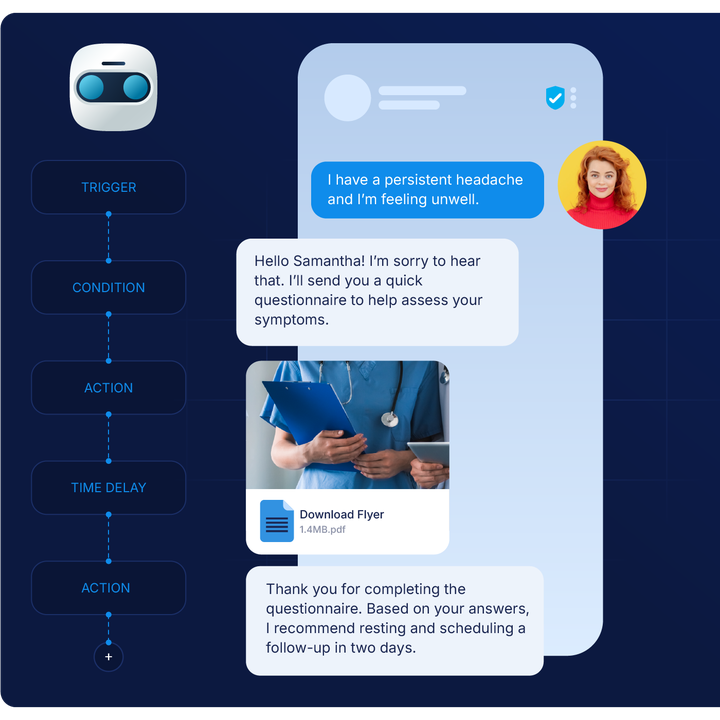
Structured two-way messaging lets patients and families raise concerns quickly and clearly. At Alder Hey, LINK's WhatsApp escalation pathway helps families request urgent reviews in minutes. This reassures families and gives clinicians clear, auditable information.
Digital PALS and Enquiry Management
Two-way messaging can also support Patient Advice and Liaison Services (PALS), helping teams:
Route enquiries to the right departments
Track responses
Provide families with timely updates.
LINK's platform supports secure workflows, tracks responses and connects with existing systems. This improves the experience for patients and staff.
Appointment Management and Care Coordination
Reducing Missed Appointments
In 2024-25, England recorded 146.1 million outpatient appointments, with 8.1 million missed - around 5.6% of all visits.⁴ These missed appointments cost the NHS an estimated £1.2 billion annually, resources that could fund over 30,000 nurses.⁵ Beyond financial costs, missed appointments can lead to delayed diagnoses and treatments, exacerbating patient conditions and increasing the burden on healthcare systems in the long run.
Digital reminders sent by SMS, RCS or WhatsApp, with easy confirmation or rescheduling, help reduce no-shows.
Follow-Ups, Discharge and Ongoing Care
Messaging also supports post-appointment care, including:
Discharge instructions
Medication adherence checks
Physiotherapy and rehabilitation plans
With RCS or WhatsApp, healthcare teams can share documents, videos and links. This helps patients understand their care and reduces readmissions.
Governance, Compliance and Data Protection
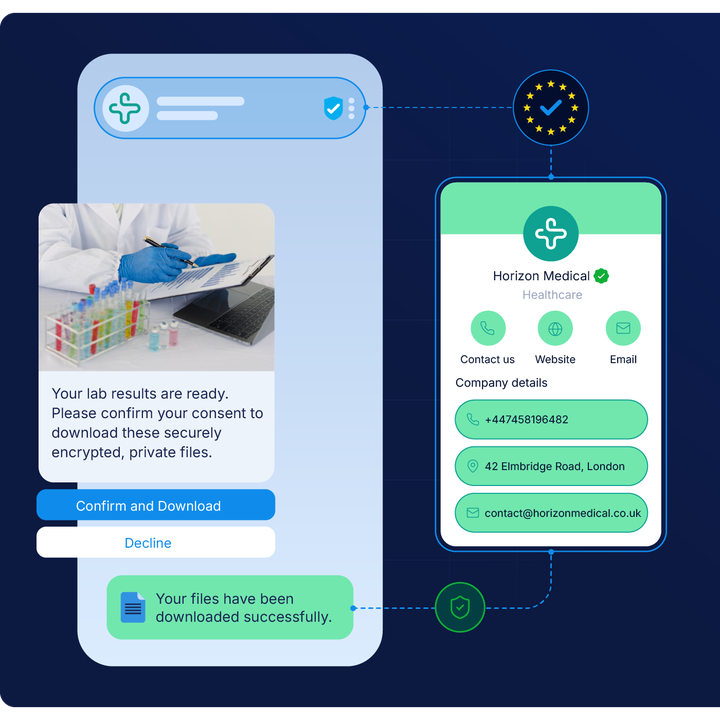
Healthcare messaging must be secure by design. NHS guidance requires transparency, consent and compliance with GDPR and data protection standards.⁶
LINK Mobility supports healthcare organisations with:
Consent and opt-in management
Secure message logging and audit trails
Integration with patient records
Governance controls across all channels
This way, messaging improves care without adding risk.
Designing Effective Messaging Journeys
Effective messaging matches each step of the patient journey, like appointments, follow-ups and escalations, with the right channel and response options.
Segmenting by patient types, like busy commuters or elderly carers, helps tailor communication and boost engagement. LINK works with healthcare teams to design, test and improve these journeys over time.
Best practice includes:
Channel and journey segmentation
Embedded clinical oversight
Clear consent processes
Measuring Impact and Improving Services
Healthcare leaders should track:
Missed appointment rates
Response and confirmation times
Patient satisfaction and engagement
With MyLINK Studio, teams can track performance, improve messaging flows and show value across services.
The Future of Messaging in Healthcare
Messaging will keep evolving, with deeper links to patient records, automated triage and more interactive formats. But secure, well-governed and patient-focused communication will always be essential.
SMS, RCS and WhatsApp are now essential tools for modern healthcare. With the right platform and expertise, messaging can boost safety, efficiency and patient trust in hospitals, clinics, care homes and hospices.
Healthcare teams often start with a pilot when exploring two-way messaging or escalation pathways. LINK Mobility partners with NHS and care providers to design secure, compliant messaging journeys that fit real-world workflows and deliver impact where it matters most.
Join Our Free Webinar: Implementing Martha's Rule - A WhatsApp Success Story
If you would like to learn more about Martha's Rule and how digital communication is being used to support patient advocacy in the NHS, you can join our upcoming free webinar. Join us on Friday 30th Jan | 12:00 - 12:45 GMT
https://digital.nhs.uk/about-nhs-digital/digital-first-messaging
https://www.england.nhs.uk/transforming-primary-care/digital-first-primary-care/digital-first-messaging/
https://www.ofcom.org.uk/consultations-and-statements/category-2/review-of-the-a2p-sms-termination-market
https://digital.nhs.uk/data-and-information/publications/statistical/hospital-outpatient-activity/2024-25
https://www.england.nhs.uk/2024/03/nhs-ai-expansion-to-help-tackle-missed-appointments-and-improve-waiting-times/
https://transform.england.nhs.uk/information-governance/guidance/email-and-text-message-communications