Why SMS still shapes business communication in 2026
The SMS channel has been part of business communication for decades. Despite waves of new messaging apps, social platforms, and digital tools, it continues to hold a steady role in 2026.
While many channels depend on mobile data, app adoption, or user preferences, SMS remains widely supported across devices and mobile networks. It works across smartphones and feature phones alike without requiring logins, downloads, or internet access. This makes it relevant for enterprises that need predictable reach, particularly for time-sensitive operational communication.
According to the GSMA Mobile Economy report, global mobile coverage continues to expand, reinforcing the continued relevance of carrier-based messaging channels such as SMS. At the same time, forecasts from Juniper Research’s A2P messaging research indicate sustained growth in application-to-person messaging traffic driven by authentication, service updates, and enterprise communication.
For global organizations, SMS remains a practical and structured communication layer within broader digital strategies.
Why SMS still works for business communication
Carrier-based delivery supports consistent reach
SMS operates through mobile carrier networks rather than internet-based infrastructure.
This creates characteristics that distinguish it from app-based messaging and email:
Messages arrive directly in the native messaging inbox
No app installation or login is required
Delivery is independent of Wi-Fi or mobile data
Messages are typically viewed quickly after receipt
Industry benchmarking platforms such as Statista’s SMS marketing analysis continue to show that SMS engagement rates outperform many digital alternatives.
For time-sensitive communication, this level of visibility remains valuable.
SMS remains universally supported
Unlike many digital channels, SMS does not depend on operating systems, device types, or user-installed applications. Mobile adoption and connectivity trends outlined in the GSMA Mobile Economy publications confirm that SMS remains supported across virtually all mobile networks worldwide.
This universality enables organizations to standardize communication across:
Mature and emerging markets
Smartphone and feature phone users
Regulated and non-regulated industries
SMS and RCS in 2026
Rich messaging expands, but SMS remains the baseline
Rich Communication Services (RCS) enables interactive features such as verified sender profiles, images, suggested replies, and buttons within native messaging apps. The development and operator adoption of RCS are documented by the GSMA RCS initiative.
However, RCS support still depends on device compatibility and operator rollout. SMS continues to serve as the universal fallback channel, ensuring that communication remains consistent regardless of device or geography.
For enterprises, this means SMS and RCS are often used together, with SMS providing guaranteed reach.
Common enterprise use cases for SMS in 2026
Transactional messaging remains a primary driver
Transactional messaging accounts for a significant portion of enterprise SMS traffic. Continued expansion of global A2P messaging volumes is analyzed in Juniper Research’s A2P messaging studies.
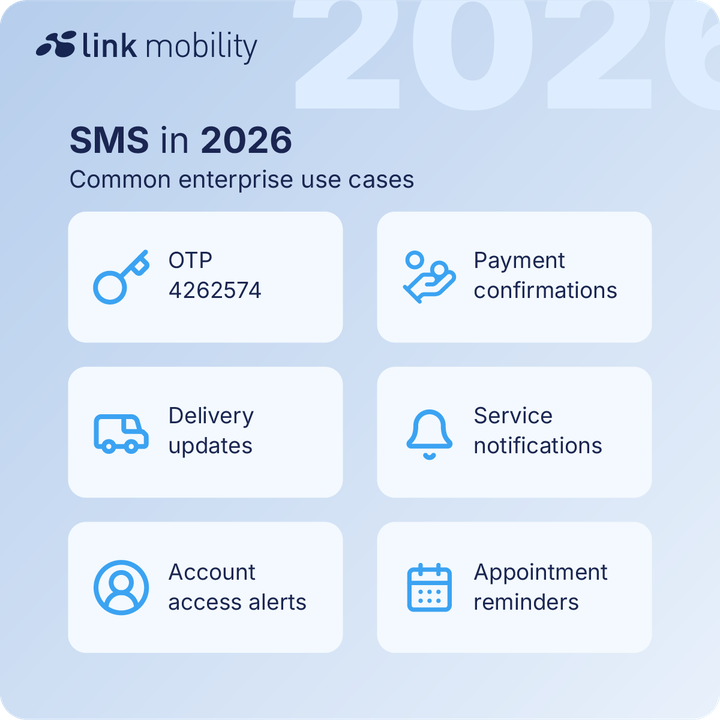
Typical use cases include:
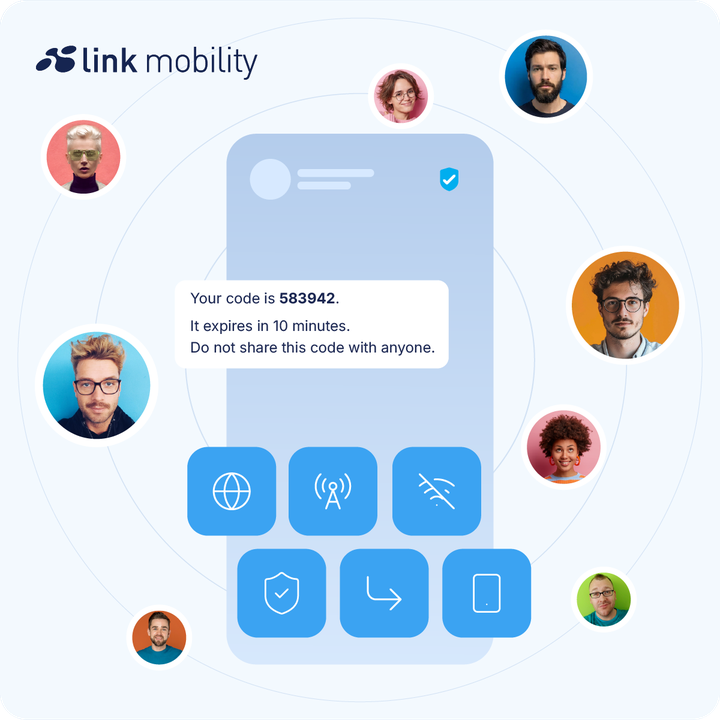
One-time passwords (OTP) for authentication
Account access alerts
Payment confirmations
Service notifications
Delivery and logistics updates
Appointment reminders
These messages require high visibility and predictable delivery, characteristics that continue to support SMS adoption.
Two-way SMS supports structured workflows
SMS is not limited to outbound alerts. Two-way messaging enables customers to reply, confirm actions, or initiate simple service interactions.
Examples include:
Appointment confirmations or rescheduling
Customer feedback collection
Basic support requests
Order status clarification
When inbound messages are routed into CRM or service systems, SMS becomes part of structured operational workflows rather than a standalone notification channel.
Marketing communication requires control and consent
SMS also supports promotional communication when consent and compliance are properly managed. Industry analysis from Statista indicates that SMS campaigns continue to achieve strong engagement compared to many other digital channels.
Common scenarios include:
Loyalty program updates
Time-sensitive offers
Event notifications
Subscription reminders
Because SMS is direct and permission-based, opt-in and opt-out processes must be handled carefully to maintain compliance across markets.
What businesses require from SMS messaging in 2026
Enterprise deployment of SMS requires infrastructure that supports scale, monitoring, and governance. Market research on global A2P messaging growth is detailed in The Business Research Company’s A2P Messaging report.
Key technical capabilities include:
These capabilities allow SMS to function as part of enterprise communication infrastructure rather than an isolated tool.
SMS APIs enable automation and integration
In 2026, SMS is typically integrated through programmable APIs rather than used manually.
APIs allow organizations to trigger messages automatically based on predefined business events such as:
Account authentication
Order confirmations
Delivery updates
Payment reminders
Service alerts
This approach reduces manual processes and ensures consistent communication across systems.
Using the MyLINK SMS API for business messaging
Outbound messaging through MyLINK SMS API
The MyLINK SMS API enables enterprises to send SMS directly from internal systems such as CRM platforms, operational tools, and customer portals. Messages can be generated using predefined templates and dynamic data fields, supporting consistent formatting across markets.Inbound SMS handling supports operational workflows
The MyLINK SMS API also supports inbound SMS functionality. Customer replies can be routed into backend systems or service platforms, enabling confirmations, feedback collection, and structured customer interaction.Delivery reporting and monitoring
Real-time delivery status information provides operational visibility into sent, delivered, or failed messages. This supports monitoring and troubleshooting across regions.Template handling for regulated markets
In certain countries, message templates and sender IDs must be preregistered. Centralized template management within the API environment helps align communication with operator and regulatory requirements.
SMS within a multi-channel communication strategy
SMS remains the stable baseline. In 2026, enterprises coordinate communication across SMS, RCS, email, and application messaging. Channel selection depends on urgency, customer preference, regional availability, and technical requirements.
SMS continues to serve as the baseline channel because it is universally supported and independent of internet connectivity. Within structured multi-channel strategies, it functions as a reliable layer for authentication, alerts, and operational messaging.
The ongoing role of SMS in 2026
SMS remains widely used in enterprise communication due to its predictable delivery model and global compatibility. As organizations increase automation in customer communication, SMS continues to support authentication, service updates, customer interaction, and operational workflows.
When integrated through solutions such as the MyLINK SMS API, SMS becomes an automated, monitored, and governed component within broader enterprise messaging architectures.
LINK Mobility serves as a local expert in SMS messaging across European markets while supporting a large global customer base. This combination provides organizations with both local messaging knowledge and operational insight, alongside experience from large international messaging deployments. For enterprises operating across multiple regions, this balance of local expertise and global perspective supports consistent and compliant SMS communication strategies.
Did you find the article and topic interesting?
If you would like to explore the subject further, discuss ideas, or understand how it could apply to your business, we are here to continue the conversation.